

Do You Need a Couples Counselor for Communication?

Some couples don’t fight loudly. They fight in the car with tight jaws, in the kitchen with clipped answers, or at 1:12 a.m. when one person rolls over and the other stares at the ceiling thinking, “If I say one more thing, it’s going to turn into a whole thing.”
If that sounds familiar, you’re not “bad at communication.” You’re stuck in a system that keeps producing the same results. And systems don’t change just because you both promise to “be nicer.” They change when someone helps you see the pattern, slow it down, and practice a different way in real time.
That’s where a licensed couples counselor for communication can be a game-changer - not because a therapist has magic words, but because the right clinician brings structure, skill, and accountability to the exact moments where you two usually lose each other.
What a licensed couples counselor for communication actually does
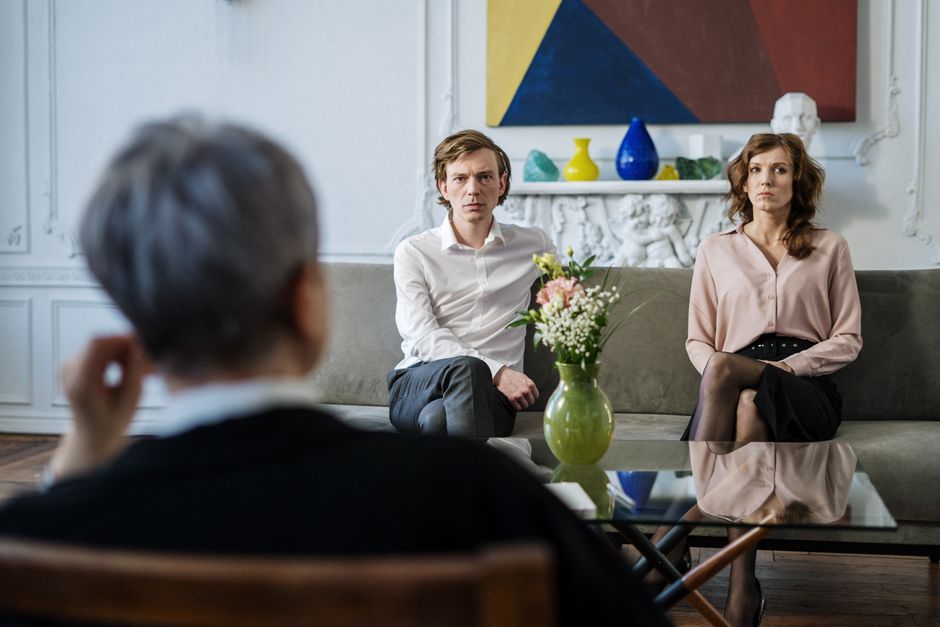
A lot of people picture couples counseling as sitting on a couch while a professional nods thoughtfully and says, “And how does that make you feel?” Sometimes feelings matter. A lot. But if you’re in Metro Detroit trying to keep your marriage from collapsing, you usually need more than insight. You need traction.
A licensed couples counselor for communication is trained to work with the relationship as the client, not just two individuals sharing a zip code. That means they’re listening for the pattern underneath the argument: the loop you keep running even when you swear you won’t.
For example, one person brings up a problem (often with a little edge because it’s been building). The other hears criticism and goes defensive or shuts down. Now the first person feels alone and escalates. The second person feels attacked and withdraws more. Nobody is “the villain,” but the pattern becomes ruthless.
In session, a good counselor will interrupt that loop. Not by taking sides, but by helping you translate what’s happening in your nervous systems, your assumptions, and your timing - and then coaching you into a different move while the stakes are still manageable.
“We communicate fine… until we don’t”
Most couples who reach out aren’t clueless. You’ve probably read books, watched clips, or tried the “I statements.” You might even communicate great about logistics: schedules, money, the kids, the dog, the contractor who keeps not showing up.
Then you hit one of the high-stakes topics and everything falls apart.
Communication breaks down most reliably around:
Trust injuries (affair, betrayal, lying, secret spending, porn use, hidden messages)
Feeling unwanted or rejected sexually
Parenting differences and resentment about workload
In-laws, boundaries, and loyalty conflicts
One partner feeling emotionally alone for a long time
This is why “tips” often fail. You don’t need a better sentence. You need a safer process - one that can handle intensity without turning into a courtroom.
The difference between coaching and licensed therapy
It depends on what you’re dealing with.
If your relationship is generally stable and you want skill-building, coaching can help. But if your communication breakdown is tied to trauma history, anxiety, depression, addiction, affair recovery, or anything that feels like it has emotional landmines, licensing matters.
A licensed professional has formal clinical training and ethical standards. They’re equipped to assess risk factors, screen for issues that quietly sabotage progress (like untreated depression or high conflict dynamics), and hold a therapeutic container where both people can be honest without being punished for it.
That doesn’t mean licensed therapy is “deeper” and coaching is “shallow.” It means therapy can responsibly handle more complexity - and many couples need exactly that when the relationship feels fragile.
What communication therapy looks like when it’s done well
Good couples work is active. You’re not just recounting last week’s blow-up and hoping the counselor tells you who was right. You’re learning how to have the conversation you keep failing at.
Here’s what tends to happen in effective communication-focused couples counseling:
1) You identify the real problem, not the loud problem
The loud problem might be “You never help around the house.” The real problem might be “I feel taken for granted and I’m scared I’m signing up for a lifetime of doing this alone.”
Or the loud problem is “You’re always on your phone.” The real one is “I don’t feel chosen.”
A counselor helps you get to the real problem without using it as a weapon.
2) You learn to speak in a way your partner can actually hear
Most couples talk in a way that makes sense to them, not in a way that lands. That’s normal. Under stress, we go for speed, not accuracy.
You’ll practice making requests that are specific and doable, and you’ll practice naming emotions without using them like grenades. You’ll also learn the difference between a complaint (fixable) and a character attack (fight fuel).
3) The listener learns to stay present without “fixing” or defending
If you’re the partner who shuts down or gets defensive, you’re not broken. Your body might interpret conflict as danger. You may have learned long ago that the safest move is to go quiet, go logical, or go numb.
Therapy helps you build tolerance for emotional intensity so you can stay in the conversation longer - and respond instead of react.
4) You repair faster after conflict
Healthy couples aren’t the ones who never argue. They’re the ones who can repair.
A licensed couples counselor for communication will teach you what repair sounds like in your relationship: owning your part, naming what went wrong without rewriting history, and reconnecting emotionally so the argument doesn’t spill into the next three days.
When communication problems are really intimacy problems
Let’s be honest: a lot of “communication issues” are covering for pain around closeness.
If sex is dead, awkward, or full of rejection, you’re not just missing physical connection. You’re missing a powerful way couples bond, feel chosen, and reset after stress. That absence often leaks out as criticism, sarcasm, or roommate energy.
On the flip side, if you can’t talk without fighting, it’s hard to feel safe enough to be playful, flirty, or vulnerable in bed. So you end up with a brutal loop: less connection leads to worse communication, which leads to even less connection.
This is where a counselor who is comfortable addressing both emotional and physical intimacy can make therapy feel more relevant. Not every clinician wants to go there. And if it matters in your relationship, you deserve someone who can.
What to look for when choosing a counselor
This is not the moment for “good vibes only.” You want a professional who can be warm and direct.
Look for someone who can clearly explain their approach to couples work and who is willing to be active in the room. If they can’t describe how they help couples communicate differently, you may end up paying for circular conversations.
Also pay attention to how you feel in the first session. Not “Do I feel happy?” but “Do I feel emotionally safe enough to be honest?” A good counselor creates a no-judgment space without letting harmful behavior slide.
And yes, logistics matter. Virtual sessions can work well for communication therapy because you’re practicing in the same environment where you live your life. In-person can be better for some couples if home feels too distracting or tense. It depends on your situation, your schedule, and how escalated things have been.
Signs it’s time to get help now, not later
If you’re wondering whether it’s “bad enough,” consider this: most couples wait too long. They show up when the resentment is already thick and the hope is already thin.
It may be time to reach out if conversations turn into the same fight, if one of you is regularly stonewalling, if trust has been injured, or if you’re starting to think about separation just to get some peace.
Getting help early isn’t dramatic. It’s strategic.
What progress can realistically look like
You’re not aiming for a relationship where you never trigger each other. You’re aiming for a relationship where triggers don’t run the whole show.
Progress often looks like shorter fights, fewer mind-reading assumptions, and more emotional accuracy. It looks like being able to say, “I’m getting flooded. I need ten minutes, but I’m coming back,” and actually coming back. It looks like more laughter in the space where there used to be tension - not because life got easy, but because the relationship got sturdier.
And sometimes progress looks like making a hard call with clarity and respect. Couples counseling can also help you uncouple in a healthier way when staying together is no longer the right move. No shame. Just honesty and care.
If you’re in Detroit and you want practical help
If you’re looking for a down-to-earth, action-oriented approach that takes communication, trust, and intimacy seriously, you can explore couples counseling and relationship education at The Art of Relationships.
Help is not reserved for “other couples.” It’s for the two of you - right where you are.
One closing thought: the goal isn’t to win the conversation. It’s to protect the relationship while you tell the truth. When you can do both, everything changes.


Comments