

Do Relationship Courses Help Marriage?

Some couples wait until they are one brutal argument away from sleeping in separate rooms. Others feel more subtle pain - less laughter, less sex, more tension, more roommates-than-partners energy. Either way, when a marriage starts hurting, most people want the same thing: real help, not vague advice and not another “just communicate better” pep talk.
That is where relationship courses for married couples can be genuinely useful.
But let’s be honest. Not every course is worth your time, and not every marriage problem should be handled with a self-paced video series and a workbook. Sometimes a course is exactly the right next step. Sometimes it is a bandage on a wound that needs professional care. The key is knowing the difference.
When relationship courses for married couples actually help
A good course gives structure to couples who want change but do not know where to start. That structure matters more than people think. Most couples are not failing because they do not care. They are stuck because they keep having the same fight with slightly different words.
A well-built course slows that cycle down. It gives you a framework for communication, a way to understand conflict, and specific exercises that move things from blame to problem-solving. For many married couples, that alone creates relief.
Courses can work especially well when both partners are motivated, the relationship still has a base of goodwill, and the main issues are recurring conflict, emotional disconnection, intimacy drift, or poor communication habits. In those cases, a course can help you stop winging it and start practicing different skills on purpose.
They also help couples who feel intimidated by therapy. Some people are not ready to sit in an office, virtual or in person, and talk about their marriage with a stranger. A course can be a lower-pressure starting point. It gives privacy, flexibility, and room to process at your own pace.
That does not make it “less serious.” It just makes it more accessible.
What a strong marriage course should include
If a course promises to save your marriage in a weekend, Love Guru Greg is officially raising an eyebrow. Good relationship work is not magic. It is repetition, honesty, and a willingness to do uncomfortable things differently.
The best relationship courses for married couples usually cover a few core areas. First, they help couples understand the pattern beneath the fight. Most arguments are not really about dishes, in-laws, money, or who forgot to text back. Those topics matter, but the deeper issue is often something like feeling dismissed, controlled, unwanted, or unsafe.
Second, the course should teach practical communication tools. Not abstract theory. Real tools. How to bring up a complaint without launching an attack. How to listen without preparing your defense speech in your head. How to repair after a blowup. How to set boundaries without contempt.
Third, it should address emotional and physical intimacy. A lot of marriage content stays “safe” by talking only about communication. But many married couples are quietly hurting around sex, affection, attraction, resentment, and feeling chosen. If a course ignores intimacy, it is ignoring a major part of married life.
Finally, a strong course gives you a way to measure progress. Are fights shorter? Is defensiveness dropping? Are you having more meaningful conversations? Do you feel more connected physically and emotionally? Change should be noticeable, not theoretical.
Where courses fall short
This is the part people need to hear.
A course cannot respond to your marriage in real time. It cannot notice when one partner shuts down out of fear. It cannot challenge manipulative behavior in the moment. It cannot tailor the process when trauma, addiction, compulsive sexual behavior, or deep betrayal are driving the breakdown.
That is why courses have limits.
If your marriage has been hit by an affair, repeated lying, emotional abuse, threats, severe sexual disconnection, or years of resentment, a course may help support the healing process, but it may not be enough by itself. In high-stakes situations, couples often need a professional who can guide the work, keep it emotionally safe, and stop the conversation from turning into another disaster.
There is also the motivation problem. Courses work best when both people actually participate. If one spouse is eager and the other is rolling their eyes, half-watching videos, and saying “fine, whatever,” results are usually limited. You cannot build a stronger marriage with one person doing all the emotional lifting.
So yes, courses can help. No, they are not a fix for every kind of marital pain.
How to know if a course is the right fit for your marriage
Ask a few honest questions.
Are both of you willing to show up consistently, even if it feels awkward at first? Are your problems serious but still workable without crisis-level intervention? Can you talk without things escalating into intimidation, cruelty, or emotional shutdown every single time?
If the answer is yes, a course may be a smart next step.
If the answer is no, that does not mean your marriage is doomed. It means you may need more support than a self-guided format can provide. There is no shame in that. Heartache is horrific and painful. Some couples need a roadmap. Others need a skilled guide walking beside them.
A course is often a strong fit for couples who are busy, private, and motivated by practical tools. It can also be great for couples who want to strengthen a decent marriage before problems get worse. You do not have to wait until things are on fire.
How to choose between a general course and a targeted one
Not all marriage problems are created equal, so the course should match the actual issue.
A general marriage course can be useful if you are dealing with overall disconnection, recurring conflict, or a sense that your relationship has lost momentum. These courses typically focus on communication, conflict patterns, emotional closeness, and everyday habits that improve the relationship over time.
A targeted course is better when the problem is specific and intense. Affair recovery is the clearest example. Couples recovering from betrayal need more than “date night ideas” and active listening tips. They need a process for truth, accountability, emotional stabilization, trust rebuilding, and often sexual healing too.
The same goes for courses focused on reigniting intimacy or preparing for marriage. A targeted course can go deeper because it is not trying to solve everything at once.
That is one reason practices like The Art of Relationships offer specialized options instead of a one-size-fits-all marriage package. Different pain points need different tools.
Signs a course is wasting your time
Some red flags are easy to spot. If the course is all inspiration and no application, be careful. If it makes giant promises but gives no clear process, be careful. If it treats both partners as equally responsible in situations involving betrayal, coercion, or ongoing abuse, be very careful.
A weak course tends to sound good and change nothing. You finish a module, nod along, and then have the exact same argument in the kitchen two days later.
A better course should create interruptions in the old pattern. You may still disagree, but the tone shifts. Recovery after conflict gets faster. There is less mind-reading, less scorekeeping, and more clarity about what each person actually needs.
Progress does not have to be dramatic to be real. Sometimes it starts with one good conversation that would have become a disaster a month ago.
Courses versus counseling for married couples
This is not an either-or fight. For many couples, the best answer is both.
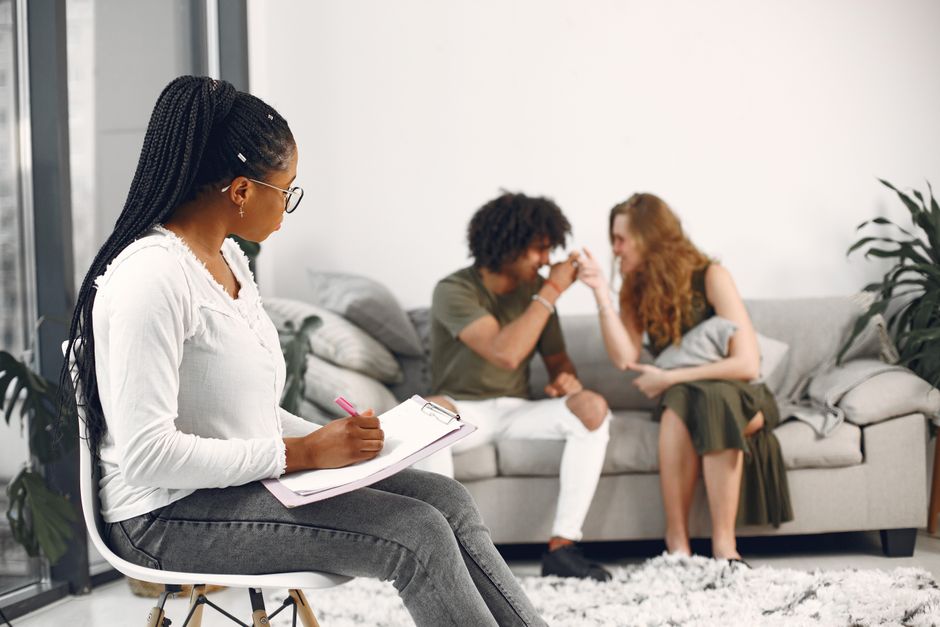
A course can teach concepts and skills between sessions, giving couples more repetition and consistency. Counseling adds personalization, accountability, and emotional safety. If you are stuck in severe conflict or trying to recover from betrayal, combining the two often works better than relying on either one alone.
If budget is a factor, starting with a course can still be a meaningful move. It is often more affordable and easier to begin. But if the course reveals how deep the pain really goes, that is useful information too. It tells you the marriage likely needs a higher level of care.
That is not failure. That is clarity.
What matters most is what happens after you enroll
Buying a relationship course feels productive. Actually doing it together is the real work.
The couples who benefit most are not the ones who perfectly agree with every lesson. They are the ones who stay engaged, practice the tools, own their part, and keep going when the process gets uncomfortable. Marriage repair is rarely about one breakthrough moment. It is usually about smaller moments repeated enough times that trust, safety, and connection start to feel normal again.
If your marriage is strained, you do not need more shame. You need a smart next step. For some couples, that step is one of the right relationship courses for married couples. For others, it is more direct support. Either way, help is not out of reach, and change is still possible when both people are willing to do the work.

Comments